The full album

While We Sleep

Songs for a Country in Denial

A ten-song examination of modern life under pressure - tracing the path from exhaustion and boundary-setting through institutional failure, human consequence, cognitive overload, and finally shared human recognition.

10 tracks Modern Protest Folk
Releases on: Loading... Countdown loading...

About the Album

A connected album about pressure, perception, consequence, and the difficulty of seeing clearly.

While We Sleep is a ten-song examination of modern life under systemic pressure - following the path from individual overload, through institutional failure and human consequence, toward fragmentation, collapse, and ultimately shared human recognition.

These songs emerged from many years of observing recurring social and human patterns: how systems, institutions, politics, media, technology, and ordinary people respond to pressure, fear, comfort, fatigue, and change.

The album explores what happens when people participate in systems they do not fully understand, when consequences feel distant until suddenly they are personal, and when attention itself becomes fractured under the weight of modern life.

Rather than arguing for a political side, While We Sleep examines the emotional and structural conditions that make fragmentation possible. These songs are not written as slogans or prescriptions. They are witness statements from inside the pattern.

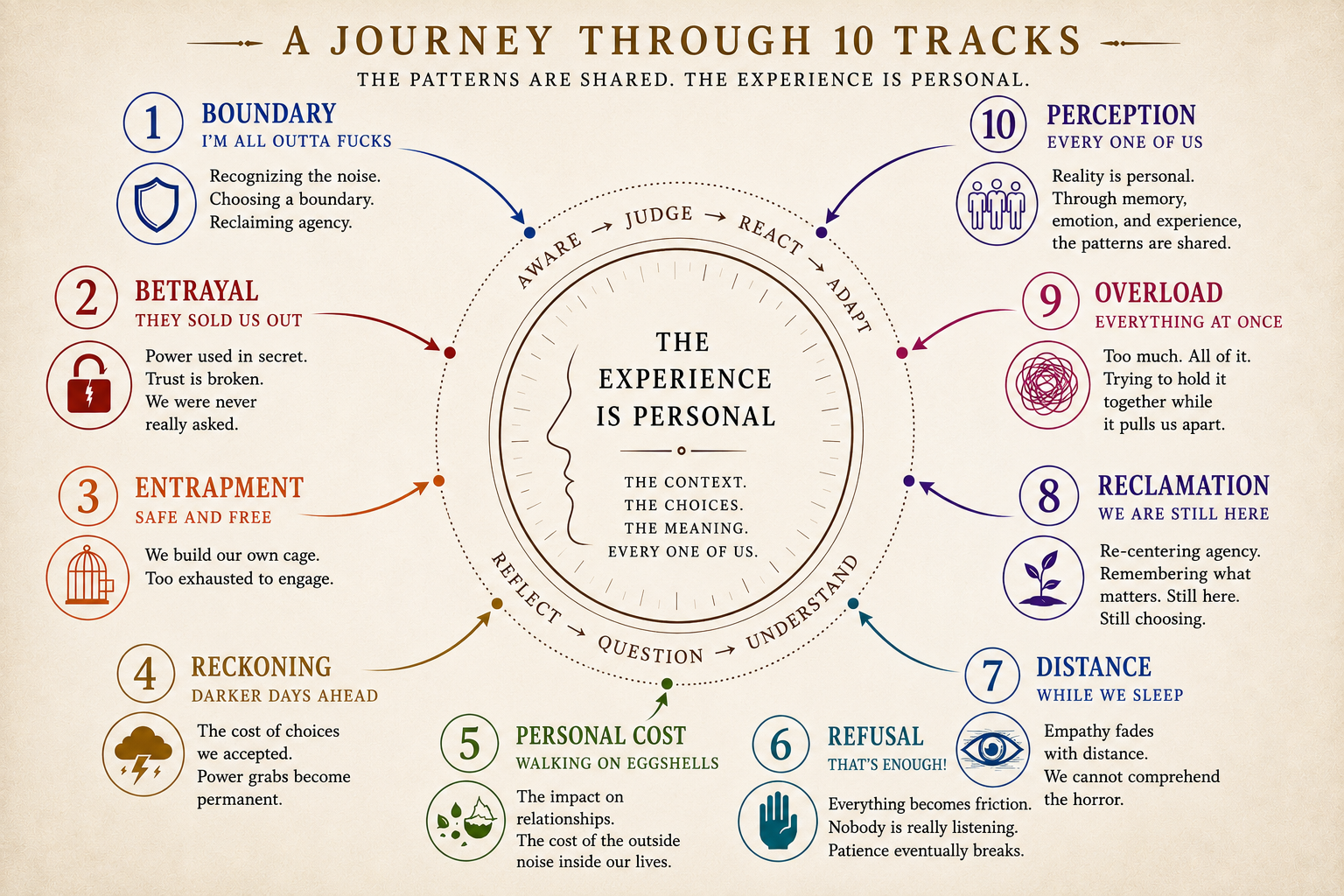
The album begins with exhaustion and boundary-setting, moves through betrayal and denial, narrows into personal cost, and then widens again into refusal, persistence, overload, and finally shared human recognition.

The Arc

The record is best heard from track one through track ten. The songs build on one another, with each one adding context to the story as it unfolds.

A Journey Through 10 Tracks diagram

The Storyline

  1. Begins with emotional exhaustion, overload, and the decision to draw a boundary
  2. Expands outward into institutional betrayal, systemic erosion, and the slow realization of what was lost
  3. Turns inward toward comfort, passive participation, and the ways people gradually accept their own confinement
  4. Moves through historical consequence, irreversible change, and the personal cost these pressures place on human relationships
  5. Reaches a breaking point where accumulated friction, complexity, and institutional indifference finally become intolerable
  6. Reclaims awareness, curiosity, attention, and the capacity to remain thoughtful and present despite the noise
  7. Widens into a broader moral and civilizational perspective where distance obscures empathy and consequence fades from view
  8. Peaks in fragmentation, urgency, distraction, and cognitive overload as modern life collapses reflection into reaction
  9. Resolves in a deeply human recognition that every perception, judgment, and emotional response is shaped by the experiences each person carries through life

Does the Story End?

Some albums end with answers. This one ends with perspective.

The final track is less about the story than about the listener — and how differently people arrive at what feels true to them.

Why This Album Exists

Not a solution. A witness statement.

While We Sleep does not try to fix the world. It attempts something more precise: to examine why the world feels fractured, how people participate in that condition, how modern systems overwhelm attention and understanding, and why individuals can experience the same reality while interpreting it completely differently.

Every one of us interprets reality through a lens shaped by memory, experience, fear, emotion, and identity - and those lenses are not the same.

Rather than offering slogans or certainty, While We Sleep asks what becomes possible once that fact is understood.

The Singles and the Album

Same titles. Different performances. Different purpose.

The singles stand on their own.

Several songs from While We Sleep have been released as singles in separate standalone versions. Those recordings were chosen and presented as individual releases.

The album versions belong to the arc.

The album performances are not simply repeats of the singles. They are separate performances placed inside the larger emotional sequence of the record.

Hearing a single gives you one version of the song. Hearing the album gives you the song in context.

The Musical Arc

The musical progression of While We Sleep closely follows the emotional and psychological movement of the album itself. Each track is arranged not simply to support its lyrics, but to reflect the mental and emotional state the song is exploring.

The record opens with direct confrontation and emotional exhaustion before narrowing into grounded observation, restrained tension, and growing historical weight. As the themes become more personal, the music becomes warmer and more intimate — allowing space for reflection, empathy, and human connection before pressure begins building again.

From there, the album gradually widens in both scale and intensity. Organ-driven openness, expanding sonic space, layered instrumentation, escalating rhythmic density, and increasing vocal urgency mirror the growing fragmentation, overload, and emotional saturation described throughout the later tracks.

By the time “Everything at Once” arrives, the arrangement itself becomes part of the meaning — recreating the psychological experience of living inside nonstop urgency, distraction, noise, and competing demands.

The final track then strips nearly everything away. “Every One of Us” resolves the album through reduction rather than escalation, allowing piano, space, memory, and reflection to reveal what remains underneath all systems, arguments, fears, identities, and reactions: the deeply human ways people carry experience through life and interpret reality through it.

Track by Track

Ten movements through pressure, consequence, attention, and perception.

01
I’m All Outta Fucks cover art
Boundary / Refusal

I’m All Outta Fucks

“I’m All Outta Fucks” traces the psychological movement from overload to boundary. It begins inside a world of constant political theater, media manipulation, outrage cycles, and performative conflict — an environment that continuously demands emotional investment while offering little resolution or clarity in return.

Over time, that saturation creates cognitive and emotional exhaustion, where everything feels urgent, yet nothing meaningfully changes. The song captures the moment that pressure finally breaks — not as explosive rage, but as a controlled and conscious refusal to keep participating on those terms.

What sounds like anger on the surface is ultimately something more measured: a boundary. “I’m all outta fucks” is not indifference or apathy. It is the decision to stop feeding emotional energy into endless cycles of reaction and performance while remaining aware, present, and capable of choosing what still matters.
02
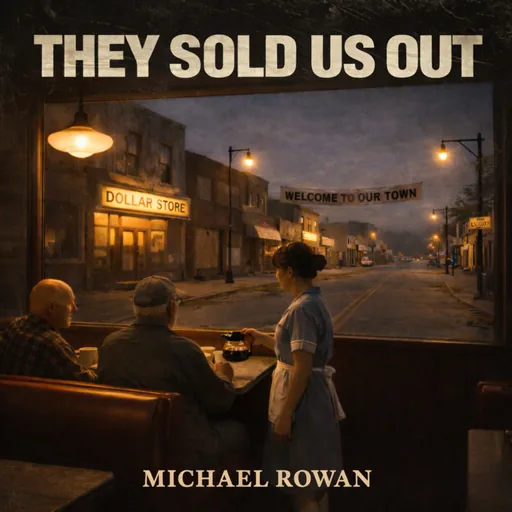
They Sold Us Out cover art
Structural Betrayal

They Sold Us Out

“They Sold Us Out” is about institutional betrayal disguised as progress — the slow dismantling of working communities through political and economic decisions framed as inevitability, long before many people fully understood the cost.

The song traces how policies justified in the language of markets, efficiency, and growth hollowed out towns, industries, identity, and stability over time — transferring wealth upward while leaving entire communities to absorb the consequences.

03
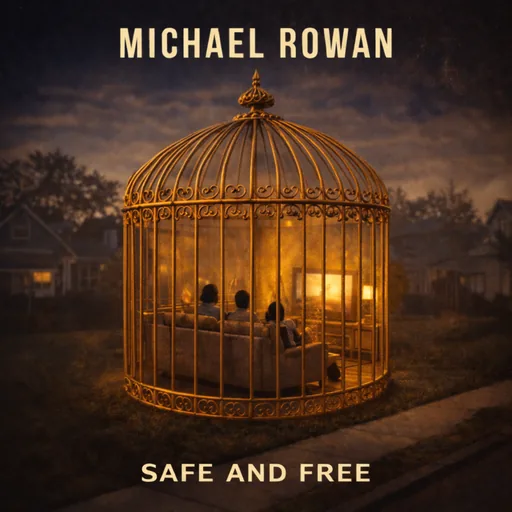
Safe and Free cover art
Participation / Comfortable Entrapment

Safe and Free

“Safe and Free” examines how comfort, fear, exhaustion, and distraction can slowly condition people to participate in their own confinement — not through overt force, but through gradual accommodation, dependency, and passive surrender.

Rather than depicting authoritarianism as sudden conquest, the song explores how freedom is often relinquished quietly: through fatigue, debt, routine, mediated reassurance, and the human desire to feel protected from uncertainty in exchange for the promise of safety — until dependence itself becomes the prison. The cage is not imposed all at once. It is built gradually, often by people who barely realize they are building it themselves.

04
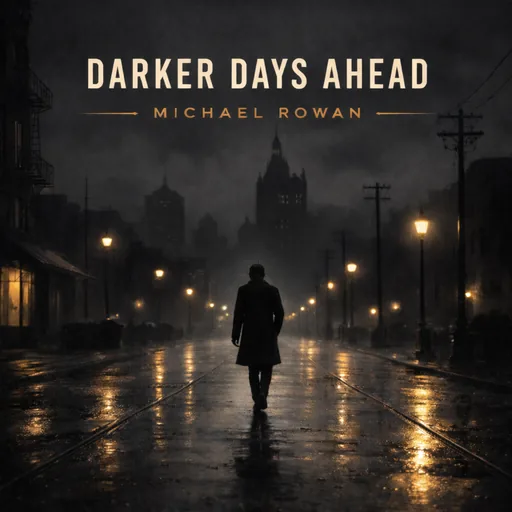
Darker Days Ahead cover art
Consequence / Reckoning

Darker Days Ahead

“Darker Days Ahead” is a restrained historical reckoning about the long-term consequences of fear-driven decisions — and the ease with which societies normalize extraordinary measures during moments of crisis.

The song traces how freedoms are rarely surrendered all at once. Instead, they erode gradually through rationalized compromise, institutional expansion, secrecy, public exhaustion, and the belief that temporary measures will remain temporary. By the time the pattern becomes visible, the structures are already entrenched.

Rather than presenting history as distant or resolved, the song suggests that historical warnings remain permanently relevant — and that societies often recognize dangerous patterns only after they have already taken root. By then, the extraordinary powers, institutional changes, and fear-driven decisions made during moments of crisis have become deeply embedded, making meaningful reversal socially, politically, and institutionally destabilizing.

05
Walking on Eggshells cover art
Personal Cost

Walking on Eggshells

“Walking on Eggshells” is a deeply human counterpoint to the larger systemic themes surrounding it — exploring how long-standing relationships are preserved through restraint, compassion, and intentional silence in the face of irreconcilable differences.

The song emerges from the experience of a long friendship built quietly over decades through shared time, routines, interests, conversations, and familiarity. Then, gradually, something changes. Conversations that once came easily begin to require more care. Things once said casually begin to carry emotional weight. Two people realize they are seeing the same world differently, and that recognition quietly reshapes how they speak, what they say, and sometimes what they choose to leave unsaid.

The song lives in that space — between people who still share history, affection, and common ground, but who now move more carefully around certain edges. Not out of fear, but out of respect. Out of a recognition that preserving the relationship matters more than winning an argument.

Its warm folk-country arrangement reflects that emotional posture. Acoustic guitar, brushed drums, subtle pedal steel, and close conversational vocals create a sense of grounded intimacy, allowing the song to move gently through tension rather than forcing resolution.

06
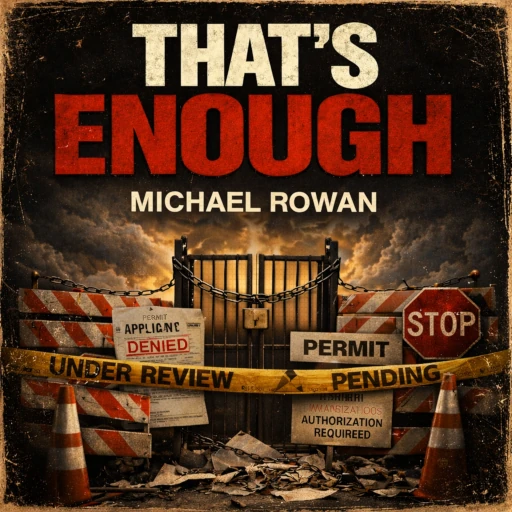
That’s Enough! cover art
Eruption / Threshold

That’s Enough!

“That’s Enough!” is a breaking-point release where accumulated systemic friction finally converts into direct refusal — transforming contained frustration into an explicit boundary against overreach, control, bureaucratic absurdity, and institutional indifference.

The song emerges from a feeling that has become increasingly common in modern life: the sense that everything now sits behind a wall of process, automation, regulation, delay, and distance. Simple tasks become prolonged ordeals. Repairs require approvals. Basic questions disappear into endless loops of automated systems, disconnected departments, chatbots, and scripted responses where nobody seems empowered to actually solve the problem.

Rather than blaming a single institution or ideology, the song captures the cumulative psychological effect of constant friction — the slow erosion of patience that occurs when systems, corporations, and institutions all begin to feel simultaneously unavoidable and unreachable.

Its gritty blues-rock arrangement mirrors that emotional buildup. Warm overdriven guitars, steady rhythm, raw vocals, and tension-filled instrumental passages gradually build toward a final release that feels less like outrage than a line finally being drawn:

“This is where it stops.”

07
We’re Still Here cover art
Awareness / Cognitive Reclamation

We’re Still Here

“We’re Still Here” marks a re-centering after emotional rupture — affirming that even after overload, manipulation, exhaustion, and disillusionment, the human capacity to question, think critically, remain curious, and seek truth can still be consciously reclaimed.

Where earlier songs trace fragmentation, pressure, fear, and institutional erosion, this track restores a sense of grounded human agency. It does not claim certainty or easy answers. Instead, it argues for something quieter but more durable: the refusal to surrender attention, curiosity, independent thought, and the ability to keep searching for understanding even in the middle of confusion and noise.

Its expansive organ-driven arrangement mirrors that emotional recovery. The song gradually widens rather than explodes, creating a feeling of renewed cognitive space after prolonged saturation and pressure.

08
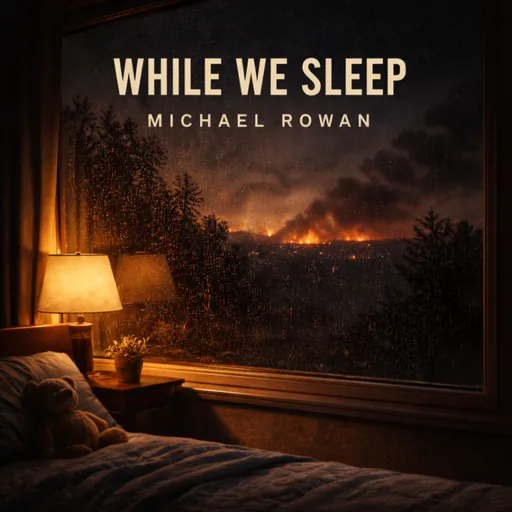
While We Sleep cover art
Moral Distance / Civilizational Lens

While We Sleep

“While We Sleep” turns outward and confronts the human cost of distance itself — the ease with which modern life allows people to coexist with destruction happening far away. It explores the dangerous comfort of distance: how people learn to live normal lives while unimaginable suffering unfolds elsewhere, often in their name, and often without fully feeling its human weight.

The song examines how war, suffering, and the pain and anguish felt by people who are really not so different from ourselves become abstract when filtered through geography, media, politics, and routine — and how that emotional separation permits violence to continue in the background of ordinary life.

09
Everything at Once cover art
Cognitive Overload / Collapse

Everything at Once

“Everything at Once” is a visceral simulation of cognitive overload — a sonically expansive collision of alarms, demands, distractions, crises, responsibilities, media saturation, and emotional fragmentation that recreates the psychological experience of modern life under nonstop input.

The song explores what happens when every problem feels urgent, every voice demands attention, every device pulls focus somewhere else, and every moment becomes saturated with competing signals. Under those conditions, reflection begins to collapse. Critical thought gives way to reaction. Presence dissolves into fragmentation. People stop processing and start simply trying to survive the next demand placed in front of them.

Its escalating musical structure mirrors that condition directly. Layered instrumentation, rising vocal intensity, abrupt interruptions, overlapping emotional cues, and mounting rhythmic pressure create a feeling of perpetual acceleration — not merely describing overload, but immersing the listener inside it.

Beneath the chaos, however, sits a quieter question:

“Have we forgotten how to be here?”

The song ultimately becomes less about technology itself than about the erosion of attention, presence, contemplation, and human connection in a world that rarely stops demanding more.

10
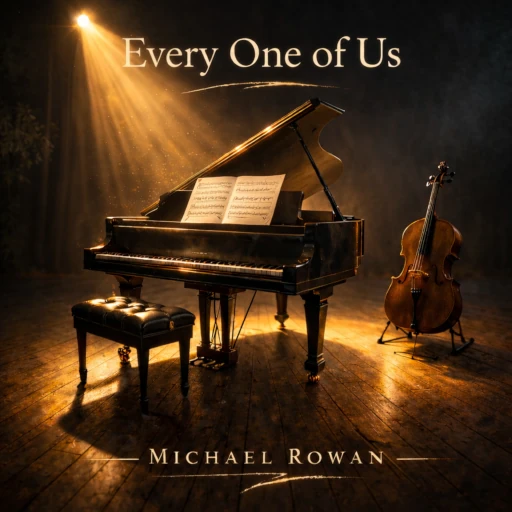
Every One of Us cover art
Human Perception / Resolution

Every One of Us

“Every One of Us” is a quiet and deeply human resolution that reduces the entire album to its irreducible core: the recognition that every perception, judgment, fear, belief, and emotional reaction is shaped by the accumulated experiences each person carries through life.

The song gradually strips away politics, systems, outrage, and ideology until only the human mechanism underneath remains. Memory, inherited experience, emotional wounds, trust, loss, upbringing, fear, love, exhaustion, and survival all become part of the lens through which people interpret reality. The song suggests that this shared condition — not simple ignorance or malice — helps explain why people can experience the same world so differently.

Its sparse piano-driven arrangement mirrors that reduction. Rather than escalating, the music continually simplifies and softens, allowing the emotional weight of the lyrics to settle into stillness and reflection. By the final spoken line, the album no longer feels accusatory or observational alone. It becomes recognizably human.

“Every one of us…”

Licensing / Contact